Page 3
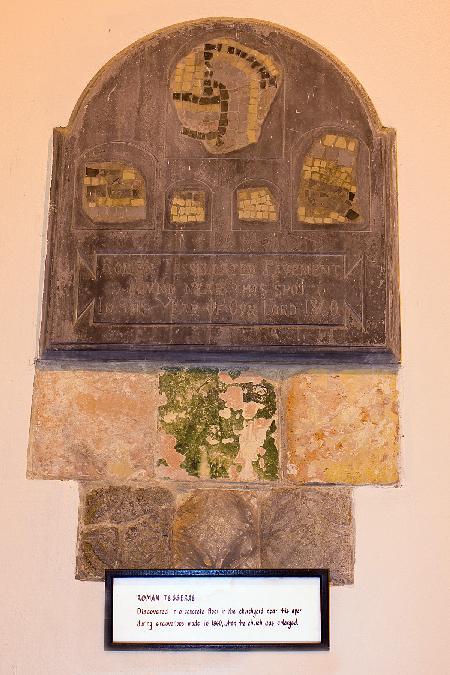
Roman tessellated pavement tiles found in the grounds of All Saints Church 1860
In the 1690s Isaac Harmon noted that the churchyard was formerly paved with small bricks or discs of diverse colours. The people, he said, called it the 'saints pavement'. The significance of the small pavement tiles was recognised in 1860 when the historian George Grant Francis identified them as pieces of a mosaic Roman floor. It is probable that Church site was orginally a Roman settlement. Read more. Roman coins have been found in other parts of Oystermouth.
The Pulpit

The beautifully carved oak pulpit was given in 1900 in memory of George Alfred Phipps, Vicar's Warden. It was made by the firm of J. Wippell of London and Exeter and is of 15th century design. The Caen stone base is also of 15th century character. The inscription is 'To the Honour and Glory of God'
|




 SITE MENU
